Publicado el

Essential roadside safety tools for truckers

Essential roadside safety tools for truckers

Driving a commercial rig across long highway stretches means facing unpredictable conditions every day. Whether you encounter a sudden tire blowout, an air line leak, or an engine warning light in the middle of the night, being prepared is your best line of defense. Carrying essential roadside safety tools for truckers in your cab is not just about following government regulations. It is about protecting your life and keeping small roadside delays from turning into major accidents.

When your truck breaks down on a dark shoulder or a narrow lane, traffic continues to pass by at high speeds. Having the right equipment ready allows you to secure your parking spot, inspect your vehicle safely, and fix simple problems while you wait for professional help. Building a complete roadside safety kit gives every driver confidence and peace of mind on the road.

Mandatory DOT safety gear every driver must carry

The Department of Transportation requires every commercial vehicle to carry basic safety equipment. These items form the core of your emergency setup. First on the list are three bidirectionally reflective triangles. When your truck stops on the shoulder, setting up these triangles at ten feet, one hundred feet, and two hundred feet behind your trailer alerts oncoming traffic early. In poor visibility or bad weather, these bright markers give distracted drivers time to move over into the next lane.

Your cab must also hold a fully charged, properly rated fire extinguisher that is securely mounted and easy to reach. Electrical shorts and overheating brakes can start fires quickly, so having a working extinguisher nearby can save your rig from total destruction. You should also keep a set of spare electrical fuses matching the ratings of your truck systems. Replacing a blown fuse on the spot can restore your lights or dashboard monitors without needing a towing service.

Need expert roadside assistance for your commercial truck? Call Fast Service to get qualified technicians dispatched to your highway location 24/7.

High-visibility gear and personal protection equipment

Visibility is everything when you step out of your cab onto a busy highway shoulder. A bright, high-visibility reflective vest or jacket is a mandatory safety item that every driver should keep right next to their driver seat. Passing motorists often struggle to spot pedestrians at night or during sudden rainstorms. Wearing high-visibility gear ensures that other drivers can see you clearly while you check your tires or set up reflective triangles.

Personal protective tools also keep you safe from extreme heat, sharp metal, and chemical spills. A heavy-duty pair of work gloves protects your hands when handling hot engine parts, rough cargo straps, or sharp trailer edges. A powerful LED flashlight or headlamp is equally crucial. Working hands-free with a headlamp lets you inspect wheel ends, undercarriage air lines, and engine compartments in pitch-black conditions without dropping your tools.

You can also read: Drivers Guide: 6 Great Ideas To Prepare for Road Trips

Hand tools and emergency repair supplies for minor fixes

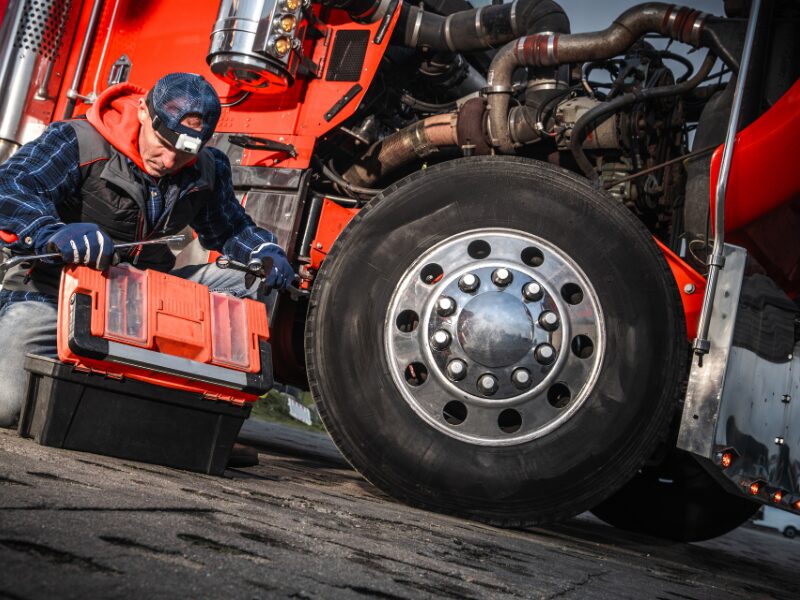
While major engine overhauls require a diesel mechanic, keeping a compact tool set in your side box allows you to handle simple fixes yourself. A quality hand tool kit should include an adjustable wrench, heavy-duty pliers, screwdrivers, a socket set, and a sturdy hammer or tire thumper. Checking tire pressure regularly with a reliable tire gauge prevents dangerous blowouts, while a breaker bar helps you loosen stubborn fittings or adjust trailer equipment when needed.

Temporary repair supplies can buy you time to reach a safe service location. Extra glad hand rubber seals, zip ties, electrical tape, and heavy-duty duct tape are inexpensive items that solve dozens of minor issues. Replacing a cracked rubber glad hand seal takes less than two minutes and restores your air system pressure instantly. Keeping a bottle of soapy water in your side box also helps you find subtle air leaks around fittings by showing small air bubbles under pressure.

Communication Devices and Emergency Power Supplies

When you break down far from a city center, staying connected is vital for your safety. A dead phone battery can leave you stranded without a way to call dispatch, emergency services, or a mobile repair technician. Carrying a heavy-duty portable power bank ensures your phone stays charged even if your truck battery dies completely. A sturdy charging cord and a secondary 12-volt charger should always stay inside your glove compartment.

In rural areas with weak cellular signals, a traditional CB radio remains a valuable communication tool. You can use it to alert nearby truckers about your stopped vehicle or ask for help from passing drivers. 

Additionally, carrying a portable jump-start pack designed for commercial vehicles gives you the power to start a dead battery without waiting for a jump-start truck. Taking control of your emergency power needs keeps you safe and connected during long roadside delays.

To get more information about us, follow us on Facebook and Instagram. Or call us right now for a road service on: repairtrucktrailer.com
Publicado el

How to choose a mobile truck repair service

How to choose a mobile truck repair service

When your semi-truck breaks down on a busy highway, you do not have time to scroll endlessly through internet search results. You need help, and you need it right away. However, picking the first company you see online without checking their credentials can lead to long delays, hidden fees, and poor repairs. Learning how to choose a mobile truck repair service ahead of time ensures that you always have a trustworthy technician ready to dispatch when trouble strikes on your route.

A reliable mobile repair provider acts as an extension of your fleet team. They bring the garage, diagnostic computers, and replacement parts straight to your rig on the shoulder, at a rest stop, or at a loading dock. To protect your cargo, your delivery schedule, and your wallet, you must know what specific factors to evaluate before you add a service provider’s phone number to your speed dial.

Look for 24/7 availability and real response times

Commercial trucking operates around the clock, and mechanical failures rarely happen at convenient times. A quality mobile repair company must offer true 24/7 availability, including weekends, late nights, and holidays. When you call their dispatch line, you should speak with a real person who can immediately give you an accurate estimated time of arrival based on current traffic and technician locations.

Be wary of companies that make unrealistic promises about arrival times. Heavy traffic congestion on major freight corridors can cause delays, so a reputable dispatcher will give you an honest timeframe rather than tell you what you want to hear. Knowing when help will actually arrive allows you to plan your logistics, inform your dispatcher or customer, and make necessary safety arrangements while you wait.

In addition to round-the-clock availability, ask how the company handles dispatching during high-volume hours. A great service provider monitors local traffic patterns and positions technicians near major shipping lanes and highway interchanges. This strategic setup ensures that even during peak travel hours, help reaches your location as quickly as possible.

Need fast and honest roadside help for your commercial rig? Contact us to connect with 24/7 dispatchers ready to send help to your location.

Verify mechanic qualifications and diagnostic capabilities

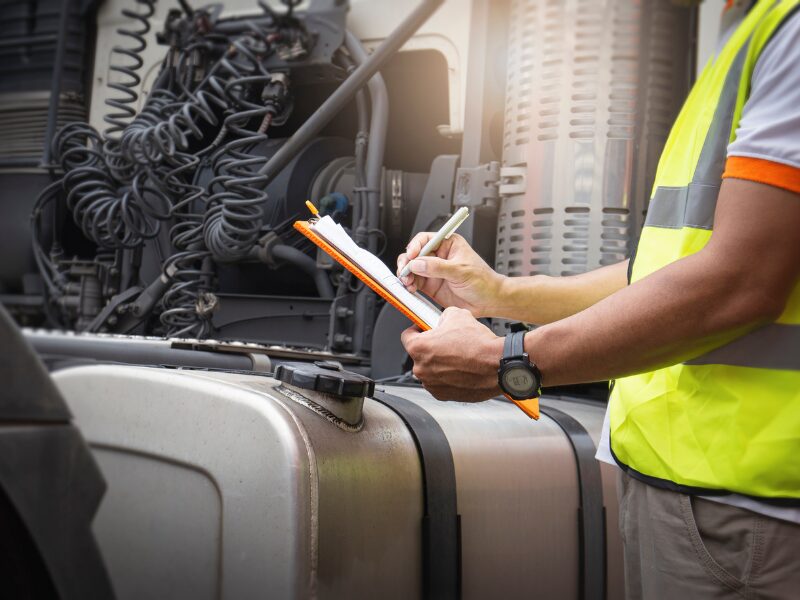
Modern commercial trucks are complex machines controlled by advanced electronic systems. A mobile technician needs much more than a set of basic wrenches and a jack to fix modern engine codes, air system leaks, or emissions issues. When evaluating a service provider, ask if their mechanics carry industry certifications and if their service trucks carry advanced computer diagnostic tools.

A well-equipped mobile repair unit should be able to read engine fault codes, perform forced regenerations, and troubleshoot complex electrical issues right on the shoulder. If a mechanic arrives without the proper software to diagnose your specific engine brand, you risk paying for a service call that ends with an unnecessary tow anyway. Ensuring the company employs experienced diesel mechanics guarantees your truck gets fixed correctly on the first visit.

It is also wise to ask about their experience with trailer repairs and heavy-duty braking systems. Many roadside calls involve issues behind the tractor, such as frozen brake shoes, ruptured air bags, or faulty trailer wiring. A qualified mechanic should be equally skilled at working on the trailer as they are on the engine block.

Demand transparent pricing and clear coverage areas

Emergency roadside calls can get expensive, but costs should never come as a surprise after the job is finished. A trustworthy mobile repair company provides clear, upfront pricing before dispatching a service truck. Ask about their call-out fee, hourly labor rates, mileage charges, and any additional fees for after-hours or weekend work.

You should also check the company’s geographic service coverage. Some providers cover a tight city radius, while others cover major interstate corridors across the state. Choosing a company with a broad coverage network ensures that you get consistent service quality and fair pricing no matter where your route takes you.

Understanding the billing structure helps fleet managers and owner-operators budget for emergencies accurately. Look for companies that offer transparent invoices with itemized breakdowns for parts and labor. This level of honesty shows that the provider values long-term business relationships over making a quick dollar on a stranded driver.

Looking for reliable roadside mechanics in Florida? Explore our complete repair services to see how we help keep heavy-duty fleets moving without hidden fees.

Check common parts stocking and workmanship guarantees

A mobile repair unit is only as useful as the parts it carries inside. The most common roadside breakdowns involve wearable components like air hoses, brake chambers, fan belts, alternators, fuses, and glad hand seals. A top-tier mobile service stocks high-use heavy-duty parts right in their service vans so technicians can complete the job without driving back and forth to a supply store.

Ask potential providers if their service vehicles carry supplies like pre-mixed coolant, oil, and air line repair kits. When a technician has the right parts on hand, a repair that could take four hours at a stationary shop takes less than an hour on the side of the road. This efficiency saves you labor costs and gets your wheels turning again much faster.

Finally, ask about their policy on work guarantees. Reputable service providers stand behind their repairs with warranties on both labor and installed parts. If a newly installed air line leaks twenty miles down the road, you need to know the company will send someone out to make it right without charging you twice. Choosing a service with solid guarantees gives you peace of mind once you roll back onto the highway.

To get more information about us, follow us on Facebook and Instagram. Or call us right now for a road service on: repairtrucktrailer.com